What it does
Everything a coordinator needs to game-plan the week.
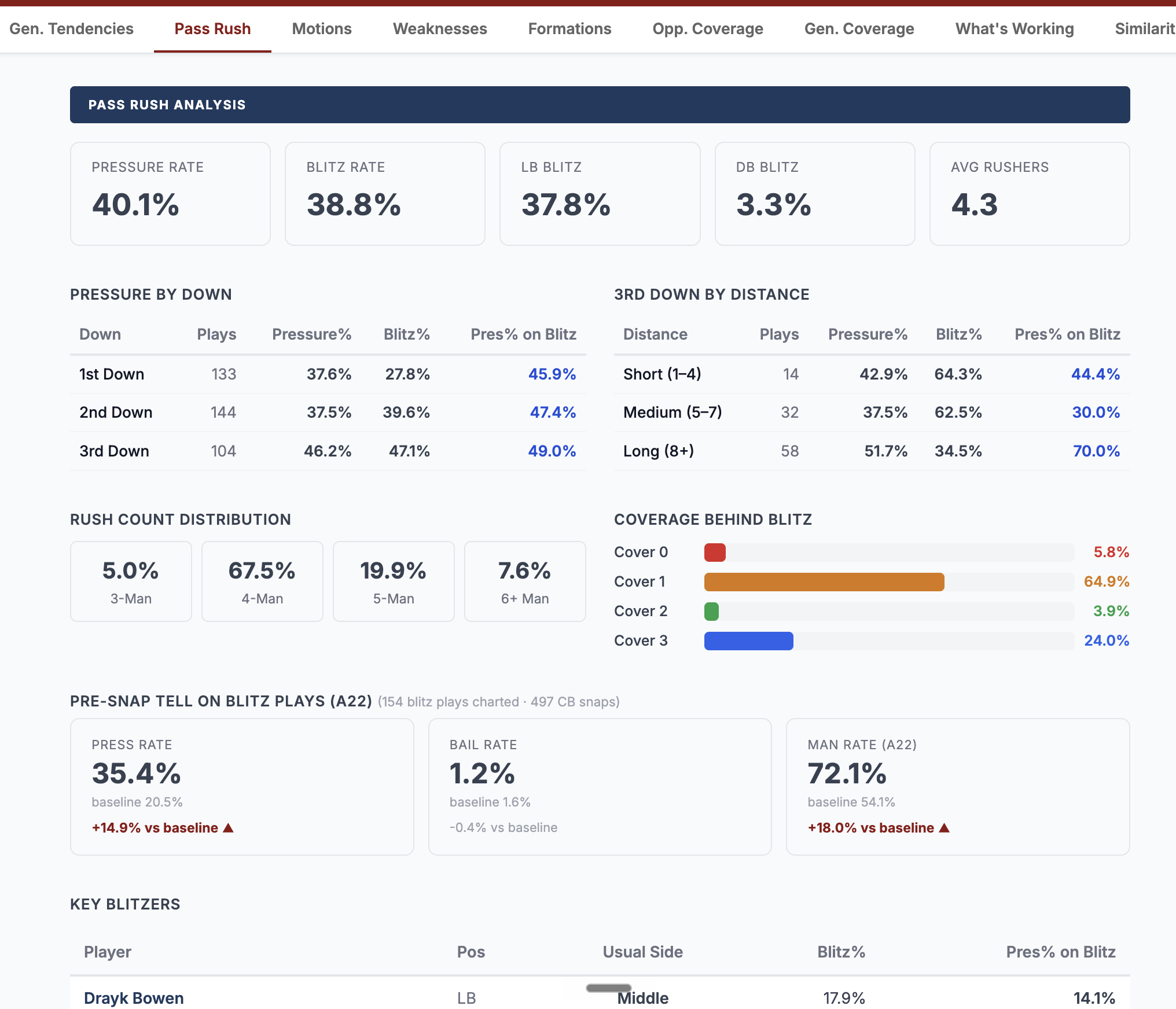
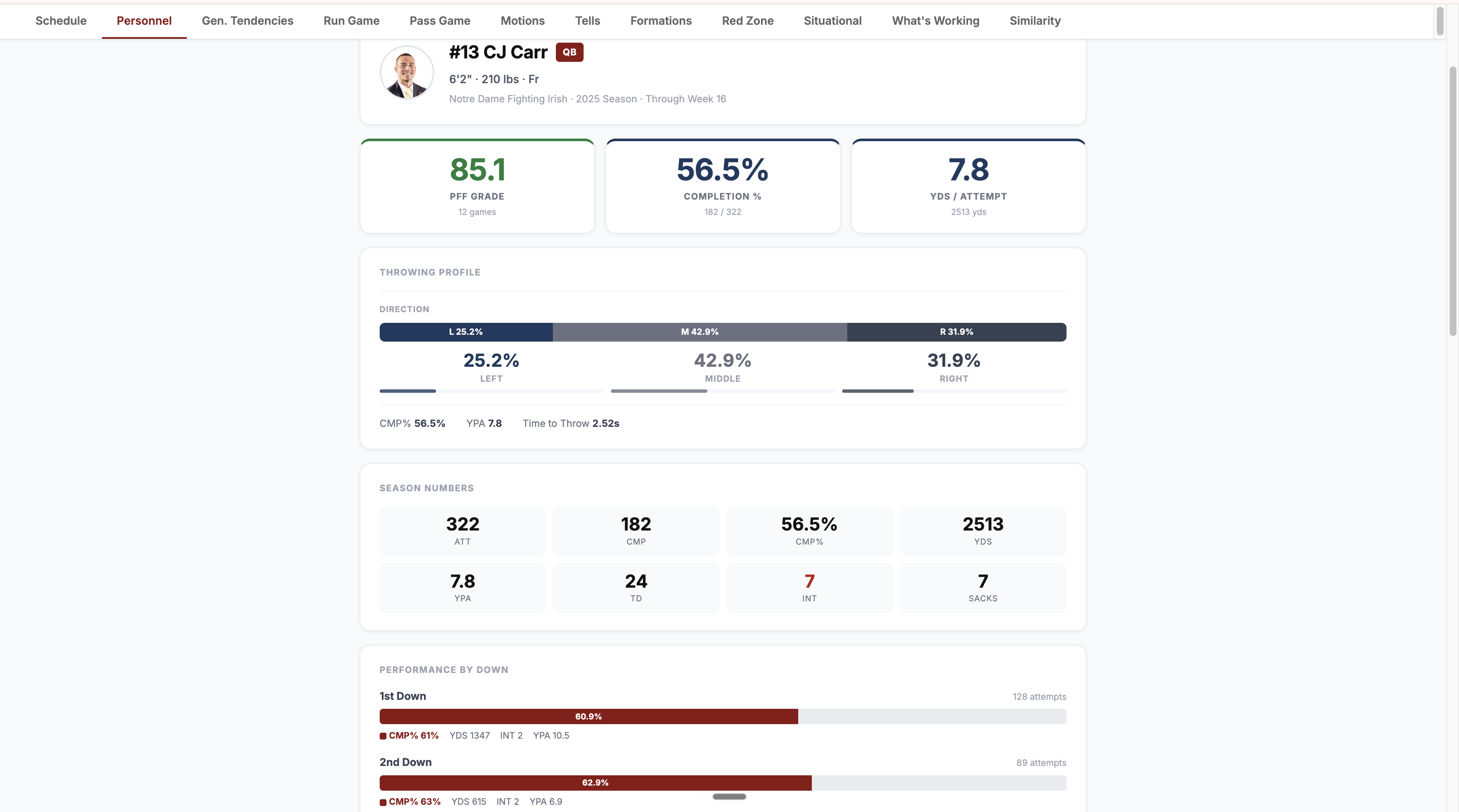
One search loads a full opponent breakdown across personnel, tendencies, coverages, pressure, motion, and formations, on both sides of the ball.
01
Complete opponent breakdowns
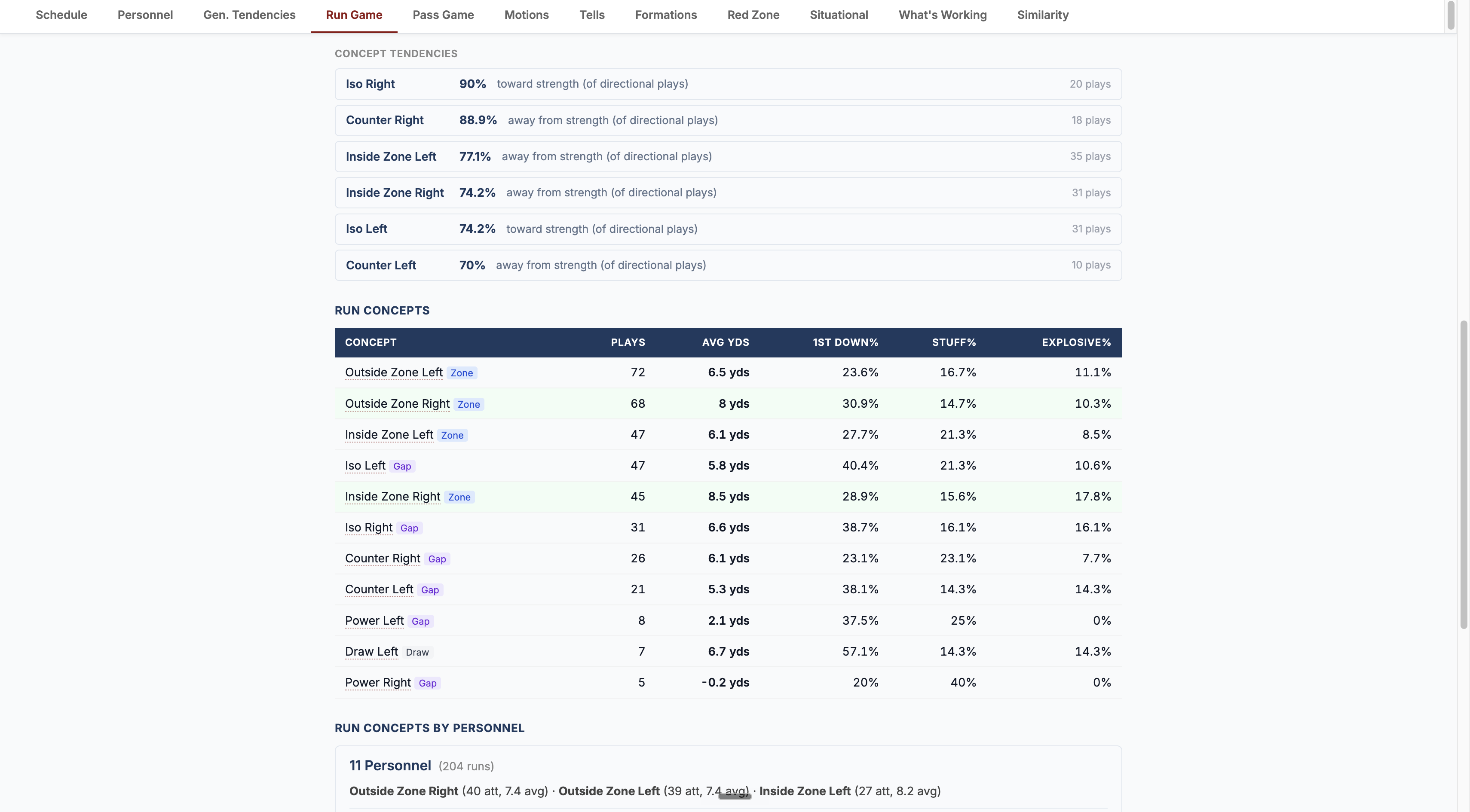
Defensive and offensive scouting in two clicks: personnel, tendencies, pass rush, coverages, motions, and formations, all in one view.
02
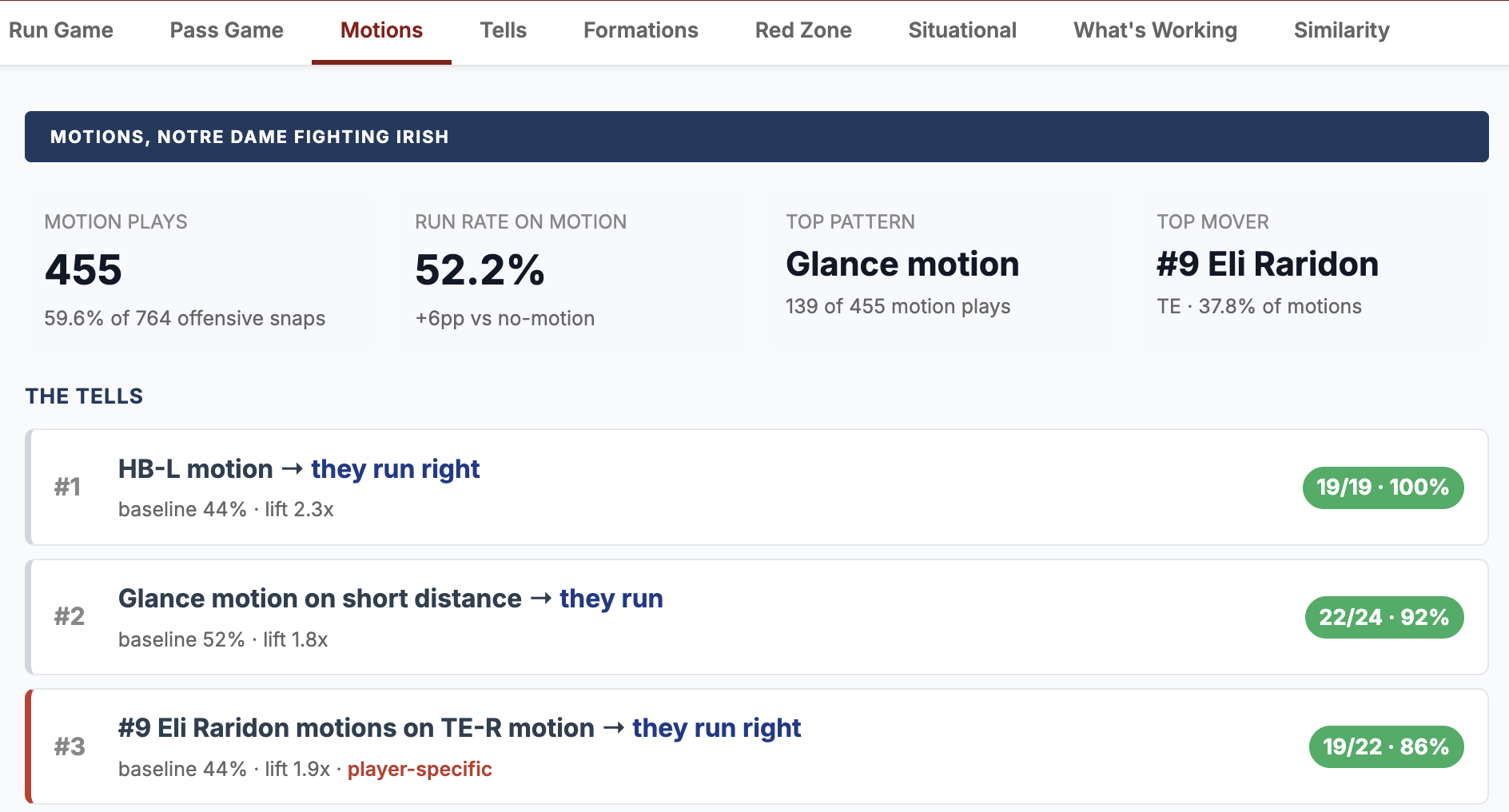
Tells on both sides of the ball
A rule miner surfaces pre-snap tells on defense and offense alike: "single-high means Cover 1 95% of the time," or "right hash on third down means Flood Left." Every tell is back-tested on held-out games, so the hit rate you see is the hit rate you get.
03
What's working
Efficiency score cards rank every unit against an FBS baseline, so you know exactly where the matchup is winnable before you script a play.
04
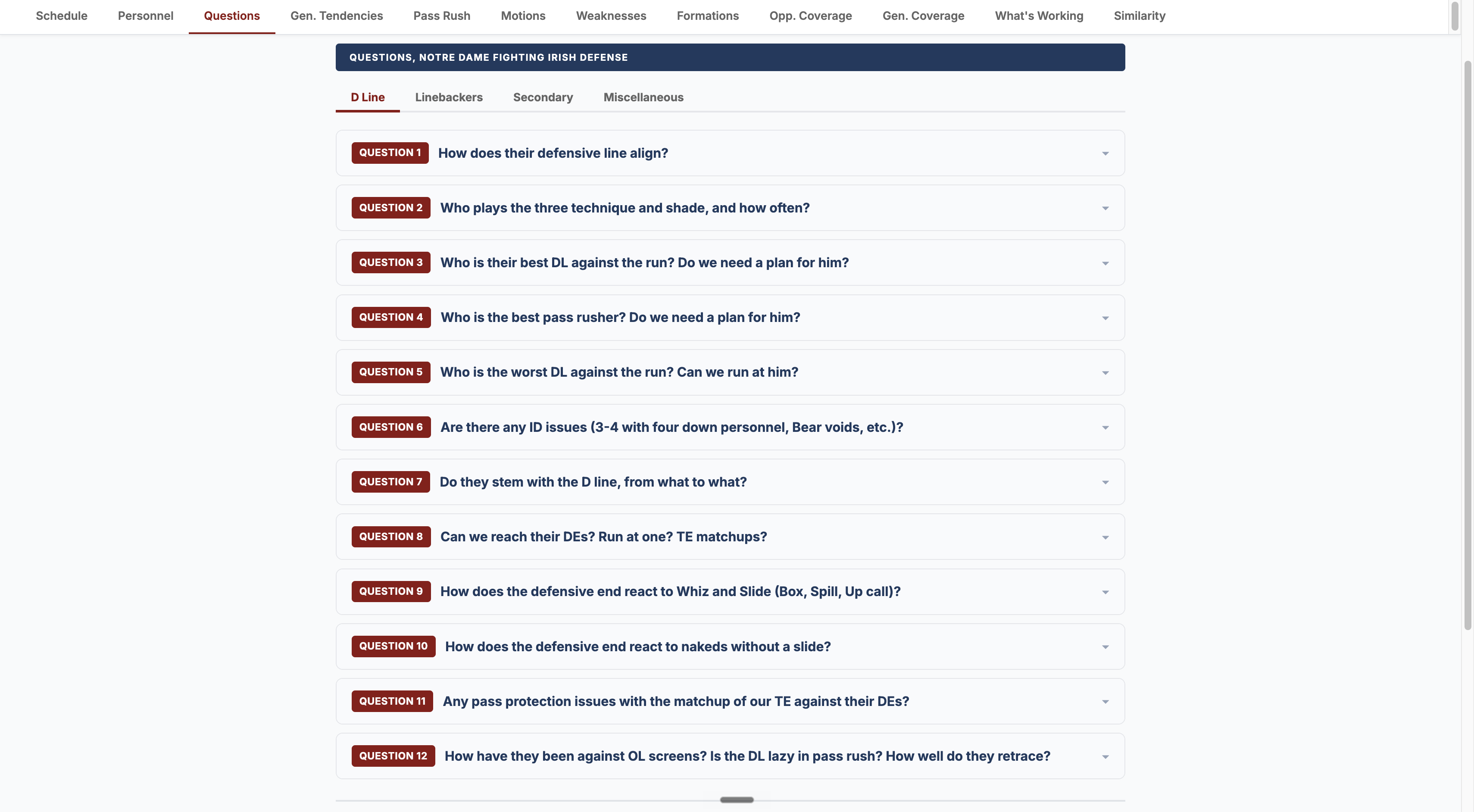
Game-plan answers
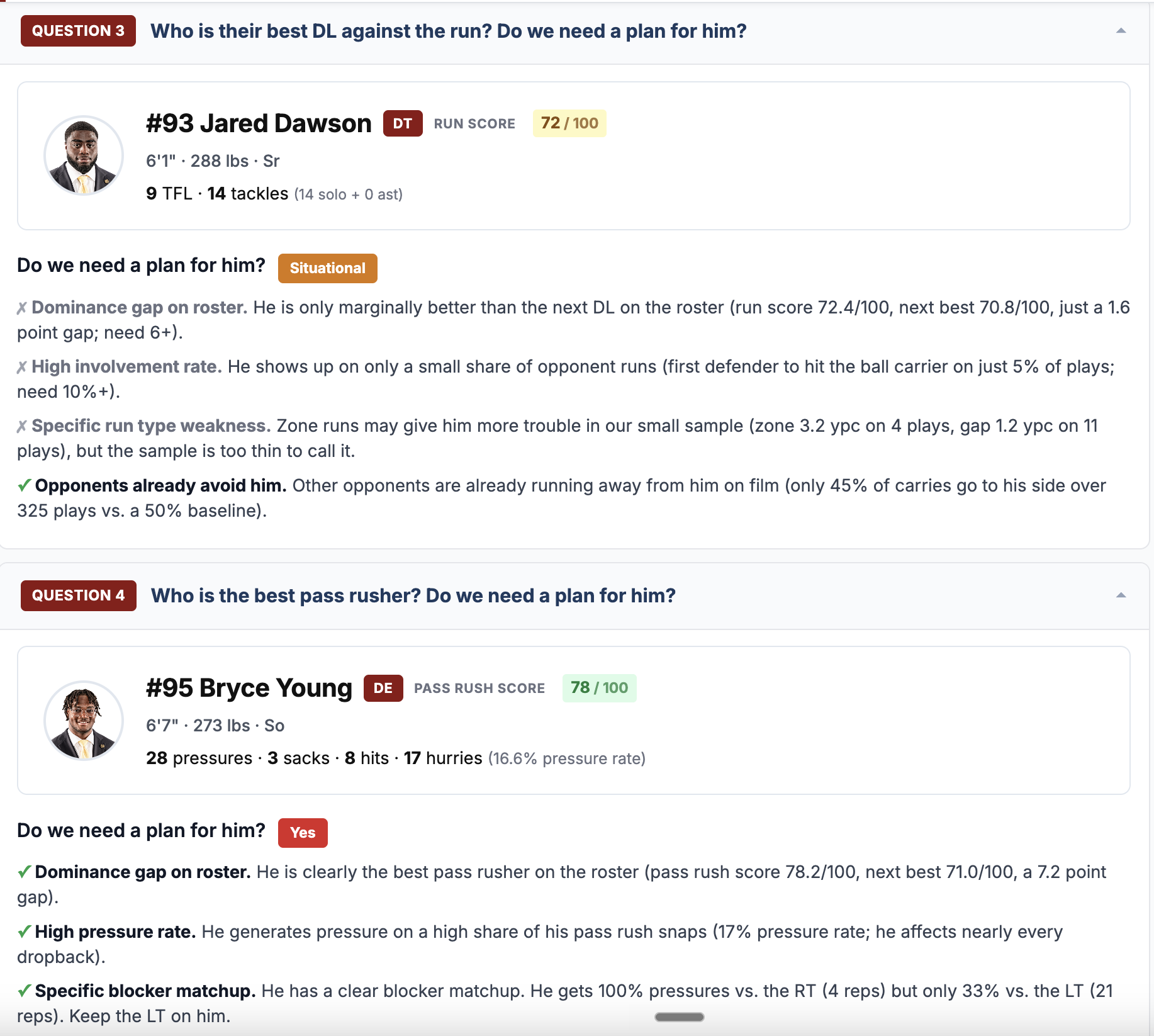
Built-in question modules answer what a coordinator actually asks: empty checks, dime substitutions, explosive-play recipes, and the go-to call on money downs.
05
Coverage prediction models
Opponent-specific machine learning predicts coverage pre-snap in two tiers: the coverage to expect, and the situational change-ups that spike under a specific look.
06
Situational game plans
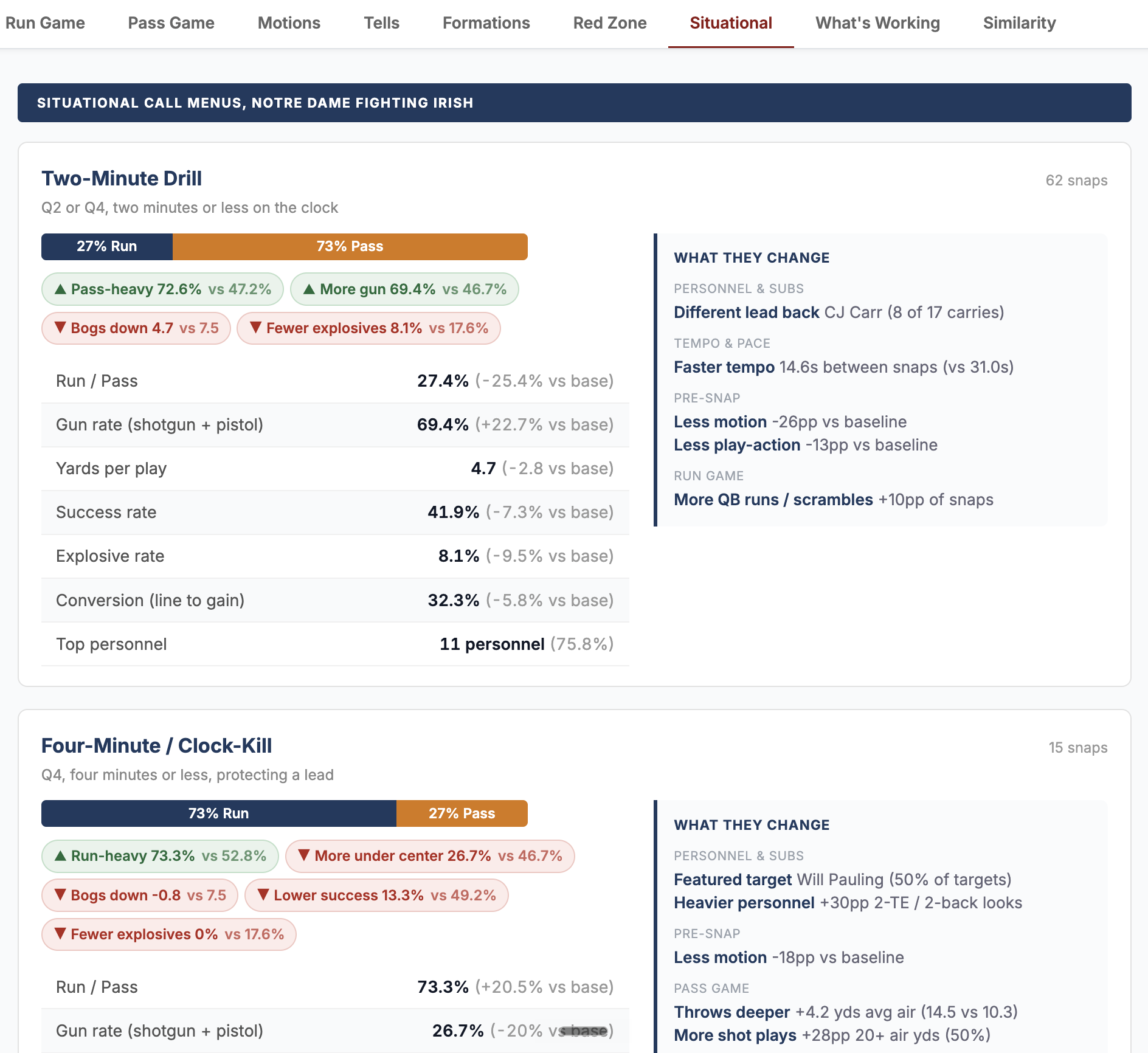
Focused scouting on exactly what a team does in the moments that decide games: the two-minute drill, killing the clock to protect a lead, backed up inside their own ten, and the first snaps after a takeaway. You get each situation's go-to calls, not the season averages that wash them out.
07
Click any insight to the film
Every number traces back to the exact PFF IDs behind it, so an insight is one click from the film. We integrate directly with your video platform, so the matching clips open right where your staff already watches film.
08
An AI analyst that does the work
Ask a question in plain English. When the answer is not already on the page, the analyst pulls live PFF data, runs its own analysis, and reasons through it step by step, showing its progress as it goes.
09
Tune the report to what matters
Drop a backup-quarterback game or a weather game and the whole report rebuilds off the tape that counts. Garbage-time snaps are filtered out by default, so tendencies reflect competitive football.
10
Ready early in the season
Scouting a team in Week 2 with one game on tape? PlayPrep blends in the end of their prior season to build a usable sample, crediting returning players and dropping the ones who left. It also accounts for coaching changes and key personnel moves, so a new coordinator or a departed star does not skew the read.
11
Speaks your football language
Coaches do not all call it the same thing. PlayPrep maps to your staff's own terminology, your names for coverages, fronts, and concepts, so the report reads the way your room already talks.
12
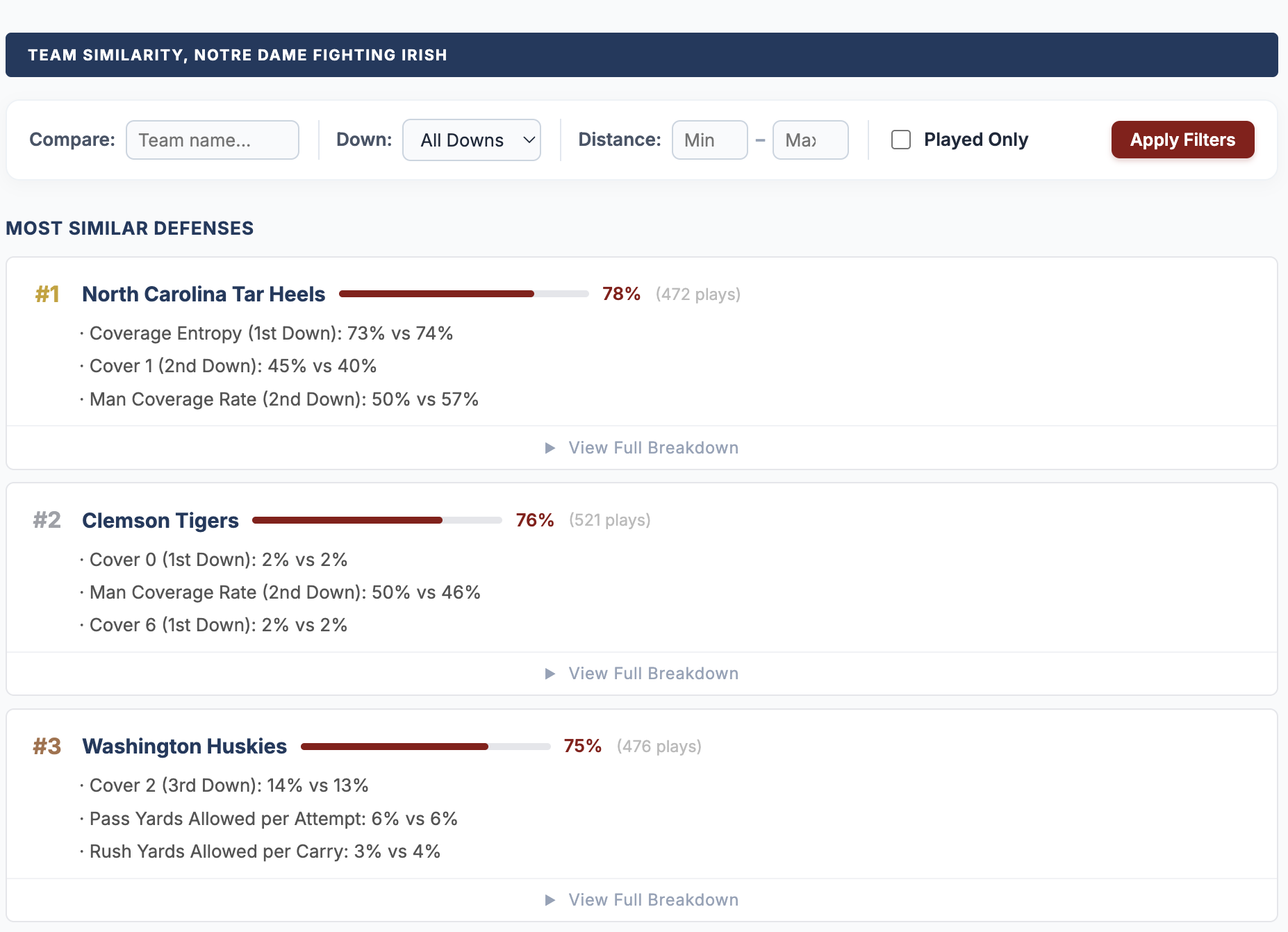
Similar-team finder
Rank the five most similar units to any opponent, so last week's tape against a comparable scheme becomes this week's prep.